


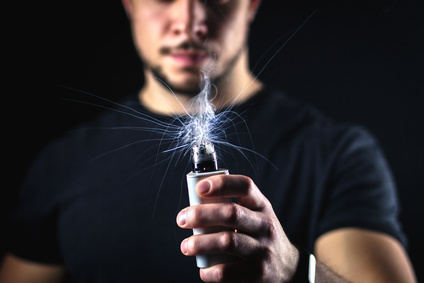
In December 2017, Matt Yamashita was about to smoke his e-cigarette when it exploded. Following this incident that caused him to lose four teeth, he will need an operation to receive dental implants. Could he be entitled to legal action and if so, against whom?
Mr. Lambert comments on the case and lists Mr. Yamashita’s options according to the civil liability law applicable in Quebec.
NB: The real case took place in the United States, where different laws and procedures apply. We use the facts as an example only.
The three criteria of civil liability
The fault
To be entitled to a remedy, it is first necessary to determine the existence of a fault and identify its perpetrator.
It is important to note that, according to articles 1468 and 1730 of the Civil Code of Québec and sections 53 and 54 of the Consumer Protection Act, Mr. Yamashita could sue not only the seller, but also the distributor, supplier, importer and manufacturer of the product he purchased.
Indeed, when Mr. Yamashita bought his vape, he had to be able to expect it to work as intended, which includes safe use of it.
This also means that all commercial intermediaries, from the manufacturer to the seller, must ensure that the good does not pose a danger – within reasonable limits and according to the character and function of the product – to the health and safety of the user.
Precautions to be taken may also include an obligation to provide a warning about the hazards of the property and indications of its correct and safe use.
In case of signing a written contract
Contracts may, to some extent, limit the seller’s liability. On the other hand, there are situations where the seller cannot exclude or limit his liability, even if it is written in the contract.
This is the case provided for in article 1733 of the Civil Code of Québec, that is, when the seller knew or should have known of the defect affecting the quality or safety of the property and did not reveal it to the buyer.
Indeed, if the manufacturer, seller or distributor becomes aware of a safety defect afterwards, he has the duty to inform the buyer, according to article 1473 of the Code.
Harm
In addition to proving fault, the malfunction of the product must have caused damage to Mr. Yamashita. In this case, since he lost four of his teeth and suffered burns on his hand and face, he can claim compensation for, among other things:
- Medical expenses;
- Aesthetic damage;
- Pain and suffering;
- Various other disorders and disadvantages.
The amount awarded by the courts may vary depending on the seriousness of the harm and what it represents for the person who suffered it. For example, if Mr. Yamashita had been a television host, the impact of a loss of his teeth would not be the same as if he had been an accountant.
Causation
Finally, Mr. Yamashita must show that there is a causal link between the fault committed and the damage. The actions or inactions of the seller, distributor, supplier or other intermediaries must have caused the damage suffered by the victim of the malfunction of the purchased good.
It may be, for example, that the product has been damaged as a result of negligent behaviour during the manufacture, transport or storage of the electronic cigarette.
If the defect resulting from such behavior is the reason why the cigarette exploded, then the causal link can be established.
Shared fault
Nevertheless, the buyer may not use the purchased product as he sees fit or behave in an unreasonable manner, without paying attention to the safety instructions. Indeed, the fault can be shared with Mr. Yamashita if he himself contributed to the misfortune he suffered.
For example, if, despite the indications and warnings on the packaging, he has improperly stored the cigarette or if he has used it for purposes other than those for which it is intended, Mr. Yamashita may be liable in whole or in part for the damage suffered.
In addition, a civil remedy may prove impossible if it is proved that Mr. Yamashita was aware of the safety defect of his cigarette or that he could have foreseen its explosion. Indeed, if the defect was apparent according to the definition provided in article 1726 of the Civil Code of Québec, limitations in the warranty of the product are in force.
Sue a manufacturer, distributor or supplier
Have you suffered damage as a result of a lack of security of a property? If you think you want to take legal action, be sure to document your case.
Keep in mind that the facts and circumstances of each case can greatly vary your chances of success in a civil lawsuit and that a lawyer can help you maximize them. Contact our office now so that we can analyze your file.
If this article has been useful to you, do not lose our weekly legal capsules on different legal topics on our Facebook page!