


You are driving your small pleasure boat on the St. Lawrence River. You make a turn and as your ship lines in its new direction, you notice a boat in your path. The latter is immobilized, but there is no sign that it was. The distance between you is now too short to give you time to dodge the boat and the collision is inevitable. The ship’s driver is now suing you to make amends for his damage.
Are you responsible for the accident? Did you make a mistake with the other browser? Would it be possible to share responsibility in such situations?
We answer your questions and explain your possible remedies using case law addressing issues similar to the example given above.
Recourse for civil liability
Generally, when accidents of this kind occur, it is in the interest of the victim to go to court in order to obtain compensation from the other party for the material, moral or bodily damage he has suffered. To do so, it will have to demonstrate by the balance of probabilities that the defendant committed a fault against him causing him harm.
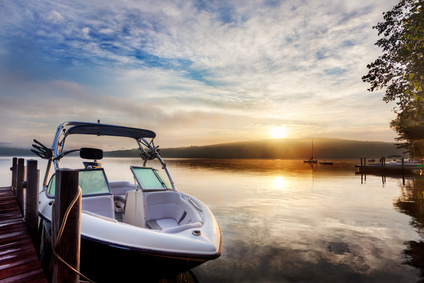
In cases involving nautical accidents, it will mainly be a question of proving that the operator or the owner of the boat was negligent in the performance of these duties. A brief tour of the case law allowed us to identify some reckless behaviour adopted by boat managers whom the judges considered to be at fault. Here are some examples.
Dangerous driving
In this first case, Mr. Dallaire, the defendant, decides to invite two of his friends to take a ride on his Zodiac, a small pleasure craft. As he sets sail with the two guests on board, he begins to zigzag and cross the waves created by the ship itself. The passengers’ testimony also suggests that the driver was making very dry turns, similar to “u-turns”. It is also during one of these famous turns that the boat collides with a wave and that the passengers find themselves thrown out of the Zodiac. Mr. Dallaire continues to fly his boat while his friends are overboard and it is then that the left arm of one of the applicants is caught by the propeller of the engine.
Mr. Dallaire defends himself by alleging that this type of boat is designed for extreme driving. He justifies himself by saying that the Zodiac is made to withstand waves and jolts and that he does not understand why the passengers were expelled.
However, the judge accepted the version of the plaintiffs who had not consented to take part in such a dangerous activity and concluded that the defendant had to do the wrongful conduct and had to reimburse the damages for which he was responsible.
Head trauma
In another case, a mother and daughter decide to participate in a nautical activity that consists of sitting in an inflatable raft pulled by a pleasure boat. Once the boat is running, the driver, Mr. Émond, sees a wave and in order to avoid it, he decides to position the boat parallel to it in order to follow it. However, the wave hits the passengers of the raft who find themselves expelled from it. Following the violent tremors, the mother suffered a head injury that caused huge financial losses amounting to $1 million.
Expert testimony showed that an average boat operator placed in the same circumstances as Mr. Émond would have cut off in the wave, while turning off the engine in order to significantly reduce the impact of the wave on the boat.
The judge concluded that by adopting such diligent conduct, the accident could have been avoided and ordered the defendant to reimburse the full amount of the damage suffered by the defendants.
Collision between two boats
Mr. Roberge and Mr. Vaillancourt own pleasure craft. Both offer water activities similar to the one in the previous example. While the two are sailing on the same lake by pulling a raft attached to their respective boats, Mr. Roberge makes a risky maneuver and begins a mirage at high speed. He finds himself in Mr. Vaillancourt’s trajectory and makes no attempt to sketch or try to curb his momentum. The two ships collided and the occupants of the two rafts were thrown overboard. The latter are suing the two drivers in order to obtain compensation for the damage they each suffered.
For the Court, it is clear that both drivers are at fault. However, the question here is how the division of responsibility will be carried out.
With respect to Mr. Roberge’s behaviour, the experts who testified concluded that he was driving at a dangerous speed that did not allow him to take the turn properly and did not allow him sufficient time to respond appropriately to the impending collision. In addition, he contravened the regulations ensuring safe navigation since he did not have a lookout on his ship. A lookout is an essential element, it is a person who takes care of checking the blind spots of the boat and warning in case of potential obstacles in its lane. In the present case, it would have been easy to foresee and avoid the accident if Mr Roberge had designated a qualified person to act as a watchdog.
With regard to Mr. Vaillancourt’s conduct, the only complaint the court made to him was that he had not reported his presence using sound tools such as a horn or whistle.
The judge therefore ordered Mr. Roberge to reimburse 80% of the damages and Mr. Vaillancourt was held liable for the rest.
Keep in mind that each case is a case in point and that many other factors can influence the judge’s decision such as:
- driver experience;
- the training they have undergone;
- the condition of the equipment and the boat;
- passenger behaviour.
Do not hesitate to contact our firm if you need more information or if you have been the victim of a boating accident similar to those described in this article.