


The use of cell phones while driving is a well-known scourge that can have serious consequences, both in terms of road safety and legal. Have you received a statement of offence for using your phone while driving? Don’t resign yourself too quickly!
While the prohibition against using a hand-held electronic device while driving is clear in the law, each situation is unique. There may be special circumstances that allow you to contest the report you have received.
It is important to understand what exactly the law prohibits regarding the use of electronic devices while driving, the exceptions that apply and the penalties for violations. We will demystify all these crucial aspects.
Highway Safety Code
The law provides that it is:
prohibits any driver of a road vehicle from using a cell phone or any other hand-held device designed to transmit or receive information or to be used for entertainment purposes, or from using a display screen. […] The driver of a road vehicle who holds in his hand, or in any other way, a portable electronic device is presumed to be using it.
A driver who does not comply with the rule risks a fine and a loss of demerit points. In the event of a repeat offence, an immediate suspension of the licence is provided for up to 30 days.
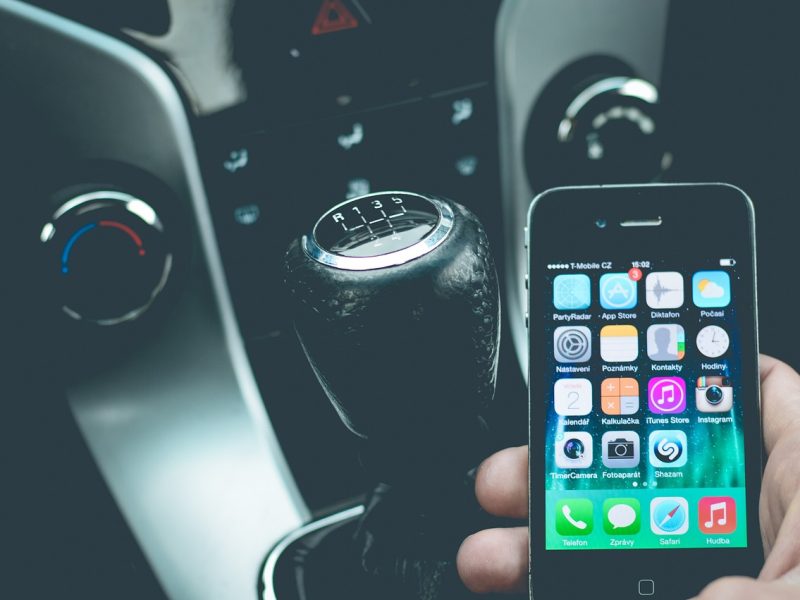
The SAAQ provides a list of the affected devices:
- cell phones;
- any device that displays email and allows you to browse the Internet, for example, tablets;
- Smartwatches (it is even forbidden to check the time while driving);
- any electronic device with a display screen, such as media players or certain models of vapes;
- screens (except those allowed, see exceptions below).
It is also relevant to specify that only wearing a one-ear earphone is allowed when driving. Indeed, if you wear a pair of headphones in both ears, you are exposed to a fine.
What “while driving” means
Anyone driving a road vehicle in a traffic lane is driving. At this time, simply holding in the hand (or between the shoulder and the ear) or touching an electronic device is prohibited.
Note that the vehicle does not necessarily have to be in motion to consider that you are driving it. Indeed, when you are stopped at a red light or in a traffic jam, you are driving.
In order to use your electronic device, you must be legally parked, which means that your vehicle must be stationary and positioned in such a way as not to constitute a danger to users. This condition does not apply to vehicles stopped near intersections, railway crossings, summits or bends.
In short, visibility must be sufficient and your vehicle must not create an inconvenience to normal traffic when parked. Examples of safe stops include a rest area, commercial parking lot, or roadside where parking is permitted.
*The shoulder lane on the highway can only be used in emergency cases. This is not a place where you can park your vehicle in order to check your electronic device.
Exceptions
- Call 911
Cell phones are allowed to call 911 in emergency situations. A driver of an emergency vehicle in the performance of his or her duties (police, paramedic) may also use a hand-held device or a display screen. In the latter case, the display will usually be integrated or attached to the vehicle.
In addition, it is also possible to use an electronic device for contactless payment or to present proof of payment while the vehicle is immobilized without parking (for example, at the drive-thru).
- Using a hands-free device
Although the hands-free use of an electronic device is tolerated, it is strictly not recommended due to the high risk of distraction. However, if you decide to use it anyway, it must comply with the conditions of use of a screen.
The conditions of use of the screens
Authorized screens must present information useful to driving. These screens are usually on the dashboard and present information such as fuel consumption, tyre pressure, route (GPS) or the activation of various systems (e.g. activation of 4WD mode, traction control or parking assist). In this sense, choosing a playlist on an electrical device is forbidden since it is not useful for driving, you must plan it before you leave!
However, its use must meet certain conditions, especially if the screen is that of your portable electronic device. It must be securely attached to a support without interfering with driving manoeuvres, the field of vision or the operation of the vehicle (for example, defrosting the windows or deploying the air bags). It is then forbidden to consult a phone held by a passenger.
In addition, it must also be easy to read and be equipped with control keys that are easy to use with voice commands, preferably. Positioning must not pose a risk of injury in the event of an accident or sudden stop.
The use of any other screens that do not comply with these conditions is strictly prohibited.
One last piece of advice, before hitting the road, remember to put your smartphone in “do not disturb” mode. If the notifications you receive are really urgent, take the time to park and act on them.
Dispute your report
While the prohibition against using an electronic device while driving is clear, each situation is unique. There may be certain circumstances in which you can contest the report you have received. Indeed, each case is unique and deserves an in-depth examination.
Do not hesitate to contact us if you have received a statement of offence for using a cell phone while driving. Our team of penal lawyers will carefully analyze the details of your case to identify any possible defenses.